Over-the-Counter vs. Prescription Hearing Aids
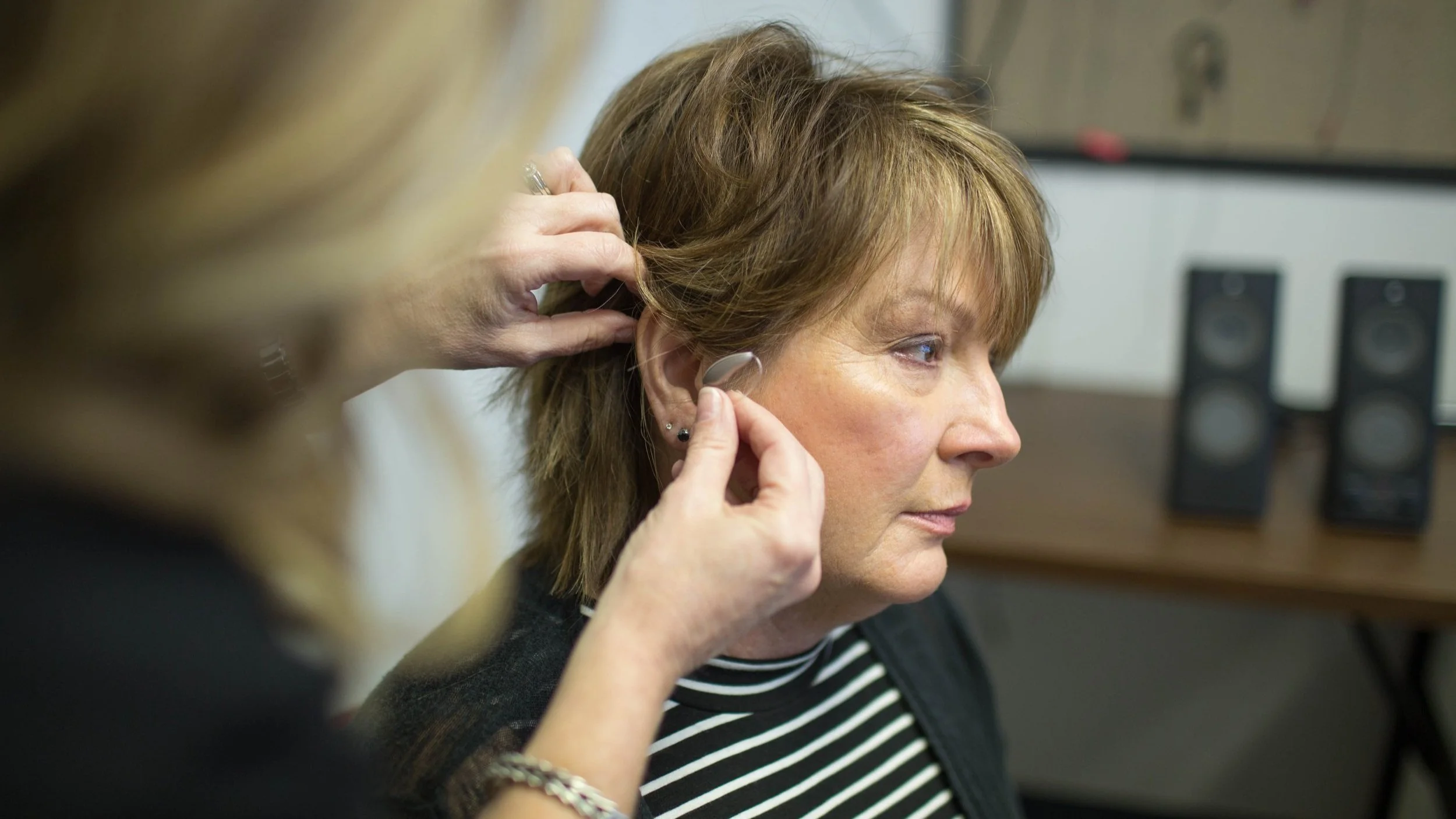
The FDA is now using two descriptors for hearing aids: Over-the-counter (OTC) hearing aids and prescription hearing aids. See how prescription hearing aids compare with OTC hearing solutions.
The hearing aids that audiologists traditionally fit are considered prescription hearing aids, meaning that they require a professional to determine the need for and optimal hearing aid settings.
OTC hearing aids are self-selecting and self-fitting. The user handles the device set-up, including the physical fit of the device and tuning of the sound, without professional support. Although not required, any consumer can get a hearing test before buying OTC hearing aids to benefit from the advice of an audiologist regarding whether an OTC hearing aid could be the right choice for them.
OTC hearing aids will have an output limit of 111 dB SPL, with 117 dB SPL allowable for devices while input-controlled compression is activated. This will be expressed in terms of maximum peak values which are consistent with Output Sound Pressure Level 90 (OSPL90) values. These limits differ from prescription hearing aids because an audiologist measures the maximum output of the hearing aids as part of the fitting process. No gain limit is being recommended or enforced for OTC hearing aids. The FDA is using the ANSI/CTA 2051 “Personal Sound Amplification Performance Criteria” as the electroacoustic standard for OTC hearing aids.
Better hearing isn’t a one-size-fits-all experience. A few quick facts:
OTC hearing aids are for self-described mild to moderate hearing loss, while prescription hearing aids can help with all types of hearing loss.
Prescription hearing aids are selected by an audiologist, but OTC hearing aids will be available in stores, pharmacies and online without a fitting or exam.
OTC hearing aids are expected to cost substantially less than prescription hearing aids.
Prescription hearing aids require the help of a health professional for an adjustment, while OTC hearing aids can be adjusted by the user.
OTC hearing aids may eventually have new designs and look different from prescription hearing aids.
Often you may need the support and skills of a trained professional for in-person diagnosis and treatment, and this is where audiologists can help! Schedule an appointment and let us help you on your journey to hearing more.
Related Blog: What to Know Now that Hearing Aids are Available Over-The-Counter